


Table of Contents
How We Rate Products
Every weeding tool below earned its spot through our Crowd Favorites rating system — three metrics from verified Amazon purchases only:
All ratings and review data shown reflect verified Amazon purchase data at the time of our most recent review. Star ratings, review counts, and five-star percentages change daily as new customers leave feedback. If you notice a product's data has shifted significantly, let us know and we'll re-evaluate its tier placement.
Learn more about our methodology →
At a Glance: All 6 Picks
| Product | Tier | Best For |
|---|---|---|
| Grampa's Weeder Stand Up Puller | 🏆 Top Shelf | Dandelions & taproot weeds, no bending |
| Fiskars Stand-Up Weed Puller | 🏆 Top Shelf | Tough soil, hands-free eject |
| Japanese Weeding Sickle | 🏆 Top Shelf | Beds, borders & fast clearing |
| GREBSTK Crack Weeder | 🏆 Top Shelf | Pavement cracks & crevices |
| Fiskars Ergo Weeder | ⭐ Fan Favorites | Precision hand weeding |
| WORKPRO Dandelion Weeder | 🌟 Rising Stars | Budget pick under $10 |
Top Shelf Product #1
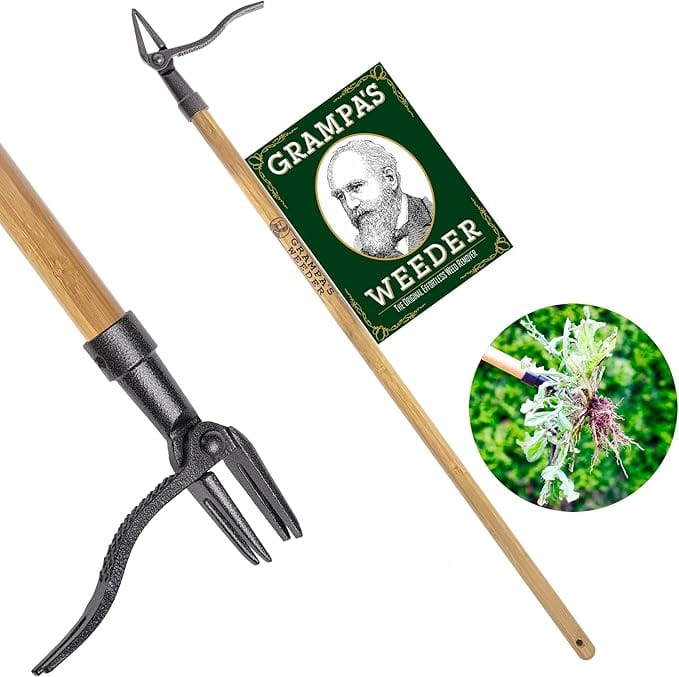
The most-reviewed weeding tool on Amazon by a wide margin — and a design that has barely changed in over a century, because it hasn't needed to. Center the 4-claw steel head over the weed, step it into the soil, tilt the long bamboo handle, and the weed pops out root and all. No bending, no kneeling, no chemicals.
✅ Pulls dandelions and other taproot weeds out whole — root and all — in one motion
✅ True stand-up design; no bending or kneeling at any point in the cycle
✅ Lightweight bamboo handle is easy on the wrists over long sessions
✅ Simple mechanical design with nothing to jam, rust out, or break
⚠️ Works best in moist soil; struggles in hard-baked or rocky ground
⚠️ Claw head is sized for medium weeds — tiny seedlings can slip between the claws
Best for: Homeowners with lawns prone to dandelions and taproot weeds who want the proven, no-bending option.
Top Shelf Product #2
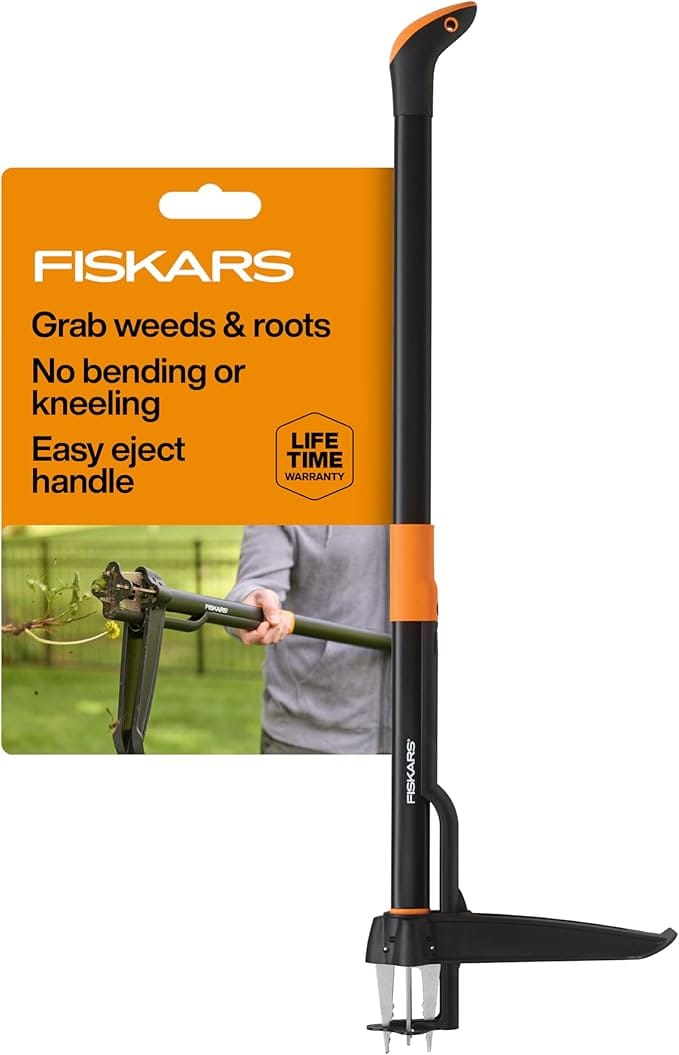
The modern engineering take on the stand-up weeder — and the tool most major review outlets name best in category. Four serrated stainless steel claws grip the root, a reinforced foot platform drives the head into tough soil, and the easy-eject slider releases the pulled weed without you ever touching it. Position, step, tilt, eject — hands clean throughout.
✅ Serrated stainless claws bite into tough, compacted soil better than smooth-claw designs
✅ Foot platform lets you drive the head in with body weight instead of arm strength
✅ Easy-eject slider discards the pulled weed hands-free
✅ Backed by Fiskars' lifetime warranty
⚠️ Pulls a small plug of soil with each weed — small lawn divots fill in within weeks
⚠️ Eject mechanism takes a few tries to get the rhythm of
Best for: Anyone fighting weeds in firmer or clay-heavy soil where a basic claw weeder struggles.
Top Shelf Product #3
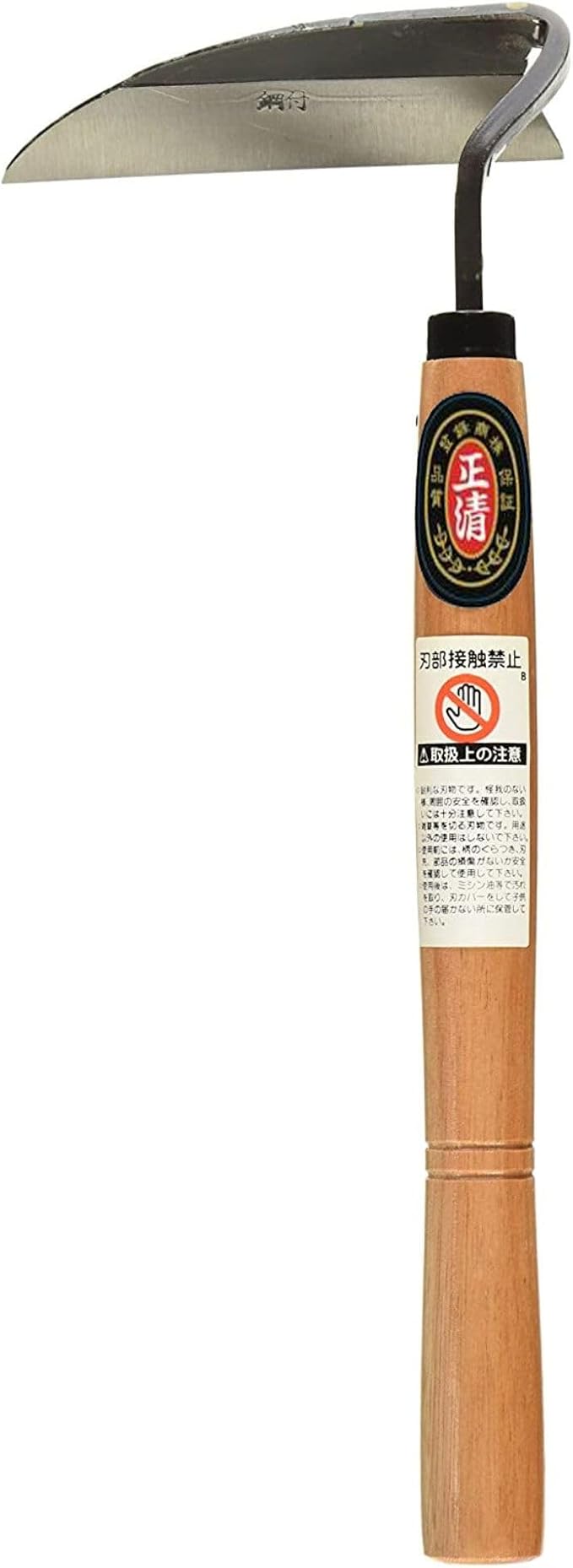
The highest satisfaction rate of any tool on this list — 85% five-star across 6,400+ reviews. The Japanese weeding sickle (nejiri gama) slices weeds off just below the soil surface with a sharp angled blade, severing the root crown in one stroke. For beds and borders with many small weeds, it clears ground dramatically faster than pulling one weed at a time.
✅ Extremely sharp edge cuts weed stems and shallow roots with almost no effort
✅ Clears dense patches of small weeds far faster than any pulling tool
✅ Doubles as a scraper and cultivator for bed prep and moss removal
✅ The best price-to-effectiveness ratio on this list
⚠️ A kneeling tool — pair it with a stand-up puller rather than replacing one
⚠️ Doesn't extract deep taproots; persistent weeds like dandelions can regrow
⚠️ Carbon steel blade needs dry storage and occasional sharpening
Best for: Gardeners who work in beds and borders and want to clear lots of small weeds fast.
Top Shelf Product #4
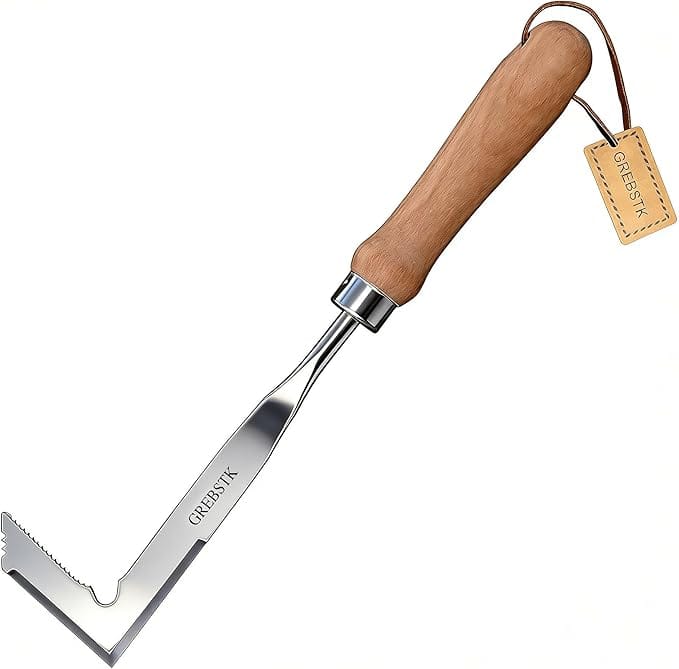
The specialist. Weeds in sidewalk cracks, driveway joints, and paver gaps are nearly impossible to extract with a standard weeder — there's no soil to dig into. The GREBSTK's L-shaped stainless steel blade slides into the seam, hooks under the root, and drags the whole plant out. Beech wood handle, hanging hole for storage.
✅ L-shaped hardened blade reaches into cracks and crevices nothing else on this list can
✅ Pulls the root out of the seam rather than snapping the weed off at the surface
✅ Lightweight (under 10 oz) with a comfortable beech handle
✅ Cheap enough to buy alongside a primary weeder
⚠️ A specialist — for open lawn or bed weeding, the other five tools all outperform it
⚠️ Hands-and-knees work along the pavement
Best for: Anyone with weeds colonizing a paver patio, sidewalk seams, or driveway expansion joints.
Fan Favorites Product #5
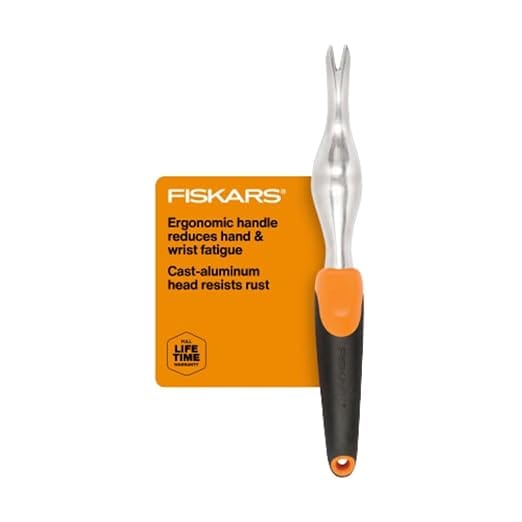
The classic hand weeder, done right. A forked steel tip slides under the weed's crown and levers the taproot out, while the cast-aluminum head shrugs off rust and the ergonomic handle reduces wrist strain. The precision option for weeding around plants you want to keep — close quarters where a stand-up puller's claw head would take out the neighbors too.
✅ Forked tip levers out dandelions and thistles root-and-all with minimal soil disturbance
✅ Rustproof cast-aluminum head holds up season after season
✅ Ergonomic handle noticeably reduces hand and wrist fatigue
✅ Light enough (6.7 oz) to forget it's in your hand
⚠️ Kneeling work by design — the close-quarters complement to a stand-up tool
⚠️ Very hard or dry soil needs loosening before the fork can get under the root
Best for: Gardeners weeding around established plants where precision matters more than speed.
Rising Stars Product #6
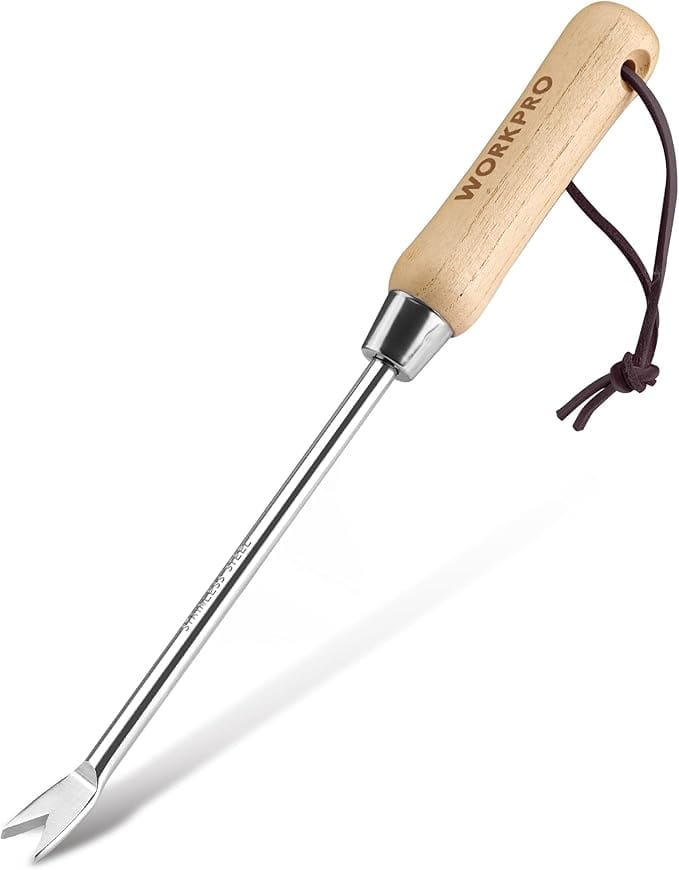
The budget pick — and early buyers love it. The time-tested two-pronged fork design: slide the prongs down alongside the taproot, lever back, and the root comes up whole. Polished stainless steel at a sub-$10 price, with an 85% five-star rate that matches the best tools on this list.
✅ Polished stainless fork resists rust and slides into soil cleanly
✅ Classic two-prong design targets taproots precisely
✅ Comfortable wood handle at a price that undercuts everything else here
✅ 85% five-star rate — early buyers rate it as highly as the category leaders
⚠️ Only 361 reviews — the smallest sample on this list. Ratings may shift as more buyers weigh in.
⚠️ Like all hand forks, kneeling work that needs reasonably workable soil
Best for: Budget-conscious gardeners who want a reliable hand weeder for under $10.
Buying Guide: How to Choose the Right Weed Removal Tool
Understanding the Main Types
Weed removal tools fall into four distinct categories, and the most common buying mistake is choosing a type that doesn't match where your weeds actually grow.
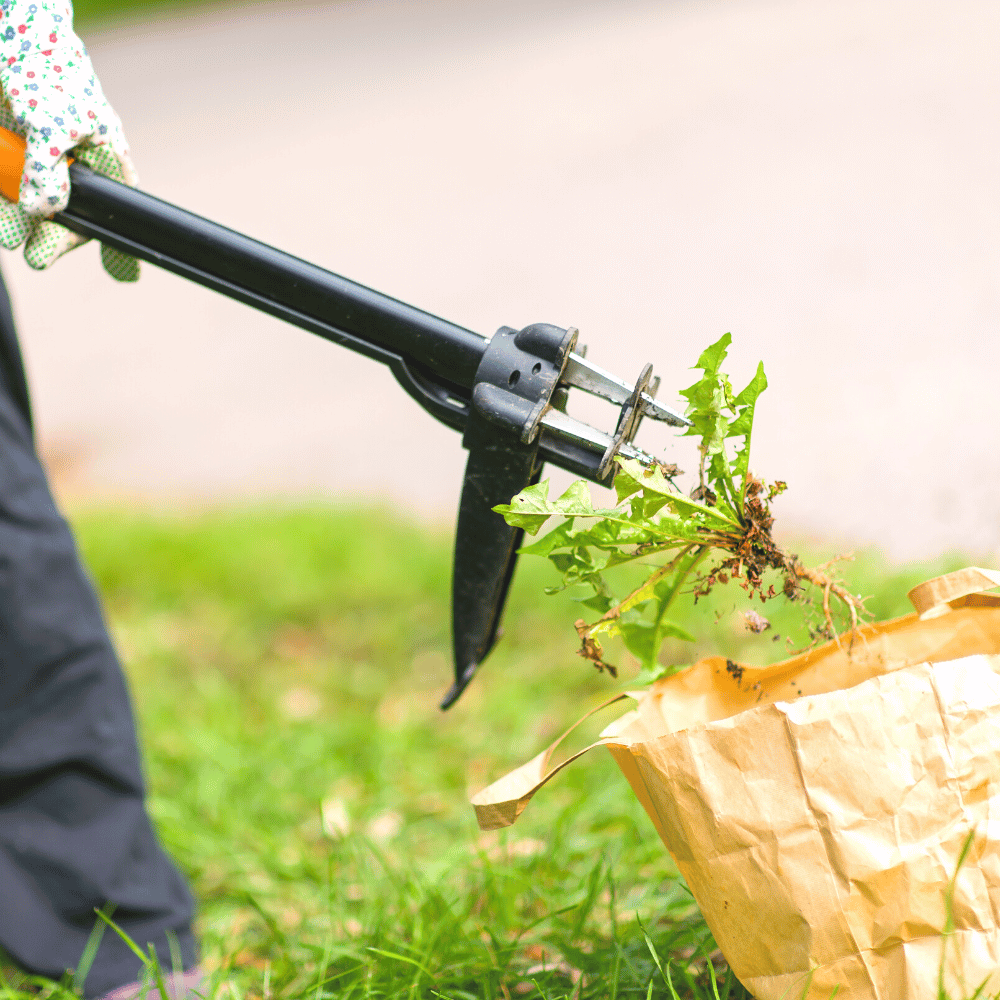
Stand-up weed pullers (like Grampa's Weeder and the Fiskars Stand-Up) use a claw head on a long handle: step the claws into the soil over the weed, tilt, and extract the root without bending. They're the right choice for lawns — especially for taproot weeds like dandelions — and for anyone whose back or knees object to ground-level work.
Hand weeders and weeding forks (like the Fiskars Ergo and WORKPRO) are short, precise tools that lever individual roots out of the ground. They're slower per weed but far more precise — the tool for working around plants you want to keep.
Weeding sickles and blades (like the Japanese weeding sickle) don't pull at all: a sharp blade slices weeds off just below the soil line. Fastest option for clearing many small weeds from beds and borders, but less effective against deep, established taproots.
Crack and crevice weeders (like the GREBSTK) are thin L-shaped blades that reach into pavement joints and paver gaps where no other tool fits.
What to Look For
Match the tool to the weed. Taproot weeds (dandelions, thistles) need extraction — pullers and forks. Shallow-rooted spreading weeds (crabgrass seedlings, chickweed) are faster to slice with a blade. If the root or its fragments stay in the ground, many species regrow.
Soil conditions. Claw-style pullers perform dramatically better in moist soil; if your ground is heavy clay or compacted, the Fiskars Stand-Up's serrated claws and foot platform justify the upgrade. Any tool works better the day after rain or a deep watering.
Standing vs. kneeling. Be honest about how you'll actually use it. A stand-up puller covers the lawn; a hand tool covers the beds. Most regular gardeners end up owning one of each — at these prices, that's still under $65 total.
Build materials. Stainless steel resists rust with no maintenance; carbon steel (like the sickle) holds a sharper edge but must be stored dry. Bamboo and beech handles are light and comfortable; check that metal-to-handle joints are riveted or bolted, not just glued.
Budget Guide
Under $15: The Japanese Weeding Sickle, GREBSTK Crack Weeder, Fiskars Ergo Weeder, and WORKPRO Dandelion Weeder are all here. The sickle is the most versatile of the four; the WORKPRO is the absolute cheapest path to a quality tool.
$15–$40: Grampa's Weeder is the proven stand-up choice — 67,000+ reviews of validation for the price of a garden hose.
$40+: The Fiskars Stand-Up Weed Puller is the premium pick for tough soil and the most refined no-bend, no-touch removal cycle, backed by a lifetime warranty.
Frequently Asked Questions
Do weed pulling tools actually work?
Yes — when matched to the right weed. Pulling tools are most effective on taproot weeds like dandelions, where extracting the root whole prevents regrowth. Studies consistently find manual root removal is the most permanent way to eliminate individual weeds. The catch: the tool must remove the root, not just the leaves — which is why claw and fork designs that grip below the crown outperform grabbing and yanking by hand.
What is the best weed puller for dandelions?
Dandelions are exactly what weed pullers are designed for: a long taproot that regrows from any fragment left in the ground. For lawns, a stand-up claw puller — Grampa's Weeder or the Fiskars Stand-Up Weed Puller — centers over the crown and extracts the entire taproot without bending. For dandelions in beds or near plants you want to keep, a two-prong dandelion fork like the Fiskars Ergo Weeder or WORKPRO slides down alongside the taproot and levers it out whole. Whichever you use, get the full root: dandelions regrow from fragments several inches down.
How do you use a stand-up weed puller?
Center the claw head over the weed's crown, then drive it into the soil — with body weight on the foot platform if your tool has one. Tilt the handle back like a lever, and the claws lift the weed out, taproot and all. Eject the weed (the Fiskars has a slider; with Grampa's Weeder, tip it out) and move on. Two technique tips from thousands of reviews: work when the soil is moist — the day after rain or watering — and let the lever do the work rather than yanking upward.
Weed puller vs. chemical weed killers — which is better?
Each has a place, but manual removal wins on permanence and collateral damage. Pulling the root removes the whole plant immediately, works in any weather, costs nothing per use, and poses zero risk to surrounding plants, pets, and pollinators — a major reason gardeners with dogs, cats, or vegetable beds go manual. Herbicides cover large areas faster but can drift onto desirable plants and require re-treatment as resistant weeds recover. For typical home lawns and beds, a good removal tool handles the job without the trade-offs.
What's the difference between a weed puller and a garden hoe?
A weed puller extracts individual weeds vertically, root and all — precise, permanent, but one weed at a time. A hoe (or weeding sickle) works horizontally, slicing many weeds off at or just below the surface — much faster over an area, but deep-rooted weeds regrow from what's left behind. The practical answer for most gardens is both: a blade tool for clearing volume, a puller for the stubborn taproot weeds that survive it.
What is the best time to pull weeds?
When the soil is moist — typically the day after rain or a deep watering. Moist soil releases roots with far less force, so more weeds come out whole instead of snapping off and regrowing. Seasonally, spring and fall are ideal: weeds are actively growing but haven't set seed. Pulling weeds before they flower is the single biggest factor in reducing next year's crop — one mature weed can drop thousands of seeds.
The Bottom Line
For most people, Grampa's Weeder is the right starting point — 67,461 reviews at 75% five-star makes it one of the most thoroughly proven garden tools on Amazon, and the no-bending design means you'll actually use it.
If your soil is compacted or clay-heavy, the Fiskars Stand-Up Weed Puller is the upgrade — serrated claws, a foot platform for body-weight leverage, and a hands-free eject, backed by a lifetime warranty.
The Japanese Weeding Sickle is the sleeper pick — an 85% five-star rate across 6,400+ reviews, and the fastest way to clear beds and borders that exists at any price.
→ Round out your kit: The Best Garden Tool Set →
How We Selected These Products
Every product was evaluated using our Crowd Favorites rating system, analyzing star rating, total review count, and percentage of five-star ratings from verified Amazon purchases. We update our picks when review data crosses tier thresholds or shows significant changes. Learn more →